
By 2028 to 2029, clothing exported to the European Union will require a Digital Product Passport (DPP) to clear customs. The EU purchases nearly 50% of Bangladesh’s ready-made garments, representing over $19 billion in annual exports. The upcoming regulations will fundamentally shift how apparel is sourced, manufactured, and documented.
What is the Digital Product Passport?
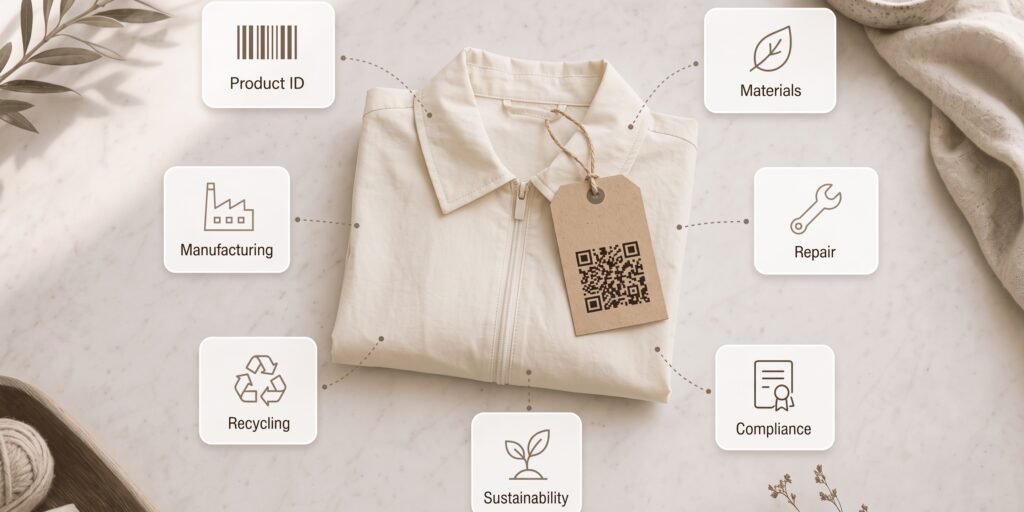
The DPP is a mandatory digital record established under the EU’s Ecodesign for Sustainable Products Regulation (ESPR). Every product will receive a unique digital ID, typically accessible via a QR code or NFC tag, linking to a secure database that tracks its lifecycle from raw material extraction to end-of-life recycling.
The Core Data Requirements
Apparel factories must supply verified, per-style data to European importers. While the exact textile delegated act is still being finalized, the core data fields include:
- Material Composition: Exact fiber percentages, including verified certificates for sustainable materials like organic cotton or recycled polyester.
- Traceability: Facility IDs, supplier tracking, and the origin of raw materials, ensuring full visibility across borders.
- Chemical Compliance: Documentation detailing substances of concern, dyes, and finishes used in production.
- Environmental Impact: Metrics covering carbon footprint, water consumption, and energy use.
Why Data is the New Standard for Market Access
European brands and importers carry the legal responsibility to register the passport on the EU market, but they depend entirely on their manufacturing partners for the underlying data. If a factory cannot supply clean, accurate traceability records, the brand cannot register the product. Without registration, the goods cannot legally enter Europe. Competing on favorable pricing, low minimum order quantities, and production speed will no longer be sufficient if data compliance is missing. Factories that act as data bottlenecks will lose orders before regulators even get involved.
How the Bangladesh Industry is Preparing
The transition from physical garment manufacturing to digital traceability is already underway in Bangladesh to protect market access.
1. Scaling Blockchain Traceability
In May 2026, the Bangladesh Garment Manufacturers and Exporters Association (BGMEA) signed an agreement with AWARE™ to implement blockchain-enabled DPP systems across 4,000 local garment factories. This technology creates a digital token for raw material batches—even when imported from countries like China or India—that travels alongside the physical shipment, ensuring cross-border traceability.
2. Factory Readiness Pilots
BRAC University’s Mapped in Bangladesh (MiB) and the Centre for Entrepreneurship Development (CED) completed a readiness project with manufacturers like Urmi Group and Epyllion Group. This initiative assessed how factory teams across merchandising, production, and quality control can collect, validate, and securely share DPP-relevant information.
3. Adapting Existing Infrastructure
The industry is utilizing compliance frameworks developed over the last decade. The MiB database already catalogs export-oriented factories with exact GPS coordinates and operational data. This existing registry serves as a baseline for the deeper product-level transparency the EU will require.
The timeline is set in EU law, with the registry rulebook applying from August 2026 and the textile mandate following closely after. As a buying house bridging the gap between European buyers and local production, Sahaz Unified Source is actively working with our manufacturing network to ensure they are prepared to meet these data requirements. Traceability is no longer an optional sustainability feature; it is a strict prerequisite for doing business in Europe.
SahazUnifiedSource #BGMEA #SUS #DigitalProductPassport #DPP #BangladeshGarments #ApparelManufacturing #SupplyChainTransparency #SustainableFashion #Ecodesign #ESPR